
The FCC TV white spaces database public trial period has come to an end. The 45 day trial started on September 19th and was successfully completed on November 2nd. Spectrum Bridge formally filed a Summary Report of the TVWS database trial which can be found here on the FCC’s electronic filing system.
We are now one step closer to the official certification of the world’s first TV white spaces database solution. The FCC and OET have done an outstanding job throughout the process of moving the concept into a real-time working solution. The FCC will now open the floor for the comment period, which allows all interested parties to submit any final comments.
As a result of the completion of the 45 day trial, we have respectfully requested that the FCC certify the database solution. We believe that this technology has the potential to revolutionize the wireless industry as it can be implemented in additional spectrum bands to help alleviate the spectrum scarcity issues currently facing the wireless industry. We look forward to seeing your comments about the trial and implementing a live solution to wireless users in the very near future!
-Andrew Pielack, Communications Coordinator
Showing posts with label spectrum bridge. Show all posts
Showing posts with label spectrum bridge. Show all posts
Monday, November 7, 2011


Monday, September 19, 2011
Spectrum Bridge Updates
When I began working in the wireless industry during the fall of 1989, few could have predicted its unprecedented growth, or how much our daily lives would be transformed by the rise of smartphones, tablets and mobile applications. As a result of innovation, the increasing demand for wireless spectrum will soon exceed availability. Unless significant changes are made to address this, the growth of wireless services could be limited due to a lack of available spectrum (we are experiencing the early effects now, as some carriers have instituted data caps to conserve capacity).
It was this perfect storm that drew me to Spectrum Bridge, a company that’s on the leading edge of developing spectrum optimization technology that will help address this looming crisis and accelerate the innovation of new wireless services. It’s a great honor and opportunity for me to partner with Spectrum Bridge co-founders Richard Licursi and Peter Stanforth, as they share a passion for innovation and have proven track records in building successful companies.
My primary focus as the new CEO of Spectrum Bridge will be to establish the long term vision for the company, transitioning the organization beyond the developmental stage to become a full service provider for connected wireless devices. I will be working closely with Peter to do so, as he continues to successfully drive the company’s technology strategy while managing our core IP portfolio. Richard has elected to move to the position of Executive Board Chairman, where he will continue to leverage his influence with industry leaders and legislators to help the company navigate today’s telecom market and regulatory environment.
The strength of the company’s core IP and the virtualization of our scalable architecture provides us with a unique opportunity to help the industry unlock the full potential of underutilized spectrum. Our objective is to meet these rapidly growing demands for bandwidth, and through the Spectrum Bridge solution, better manage shared spectrum and coexistence of the world’s mobile devices. We remain strongly committed to the following goals: maintaining our leadership position, improving spectrum utilization worldwide, and making unlimited connectivity to tomorrow’s wireless services a reality.
Our first step towards that realization is the development of an unlicensed TV White Spaces solution to enable fixed devices for rural broadband service, smart city and smart utility grid services. Earlier in the year, we were one of ten companies chosen by the FCC to develop and administer such a solution, and are the first to have a system pre-certified and involved in a limited public trial (you can find the public notice here). We have also collected a wealth of data and information from each of the market trials conducted over the past two years, and will incorporate what we’ve learned into our future service platform.
These are exciting times at Spectrum Bridge, and we look forward to updating you as we have new developments to report.
-Rod Dir, President & CEO
It was this perfect storm that drew me to Spectrum Bridge, a company that’s on the leading edge of developing spectrum optimization technology that will help address this looming crisis and accelerate the innovation of new wireless services. It’s a great honor and opportunity for me to partner with Spectrum Bridge co-founders Richard Licursi and Peter Stanforth, as they share a passion for innovation and have proven track records in building successful companies.
My primary focus as the new CEO of Spectrum Bridge will be to establish the long term vision for the company, transitioning the organization beyond the developmental stage to become a full service provider for connected wireless devices. I will be working closely with Peter to do so, as he continues to successfully drive the company’s technology strategy while managing our core IP portfolio. Richard has elected to move to the position of Executive Board Chairman, where he will continue to leverage his influence with industry leaders and legislators to help the company navigate today’s telecom market and regulatory environment.
The strength of the company’s core IP and the virtualization of our scalable architecture provides us with a unique opportunity to help the industry unlock the full potential of underutilized spectrum. Our objective is to meet these rapidly growing demands for bandwidth, and through the Spectrum Bridge solution, better manage shared spectrum and coexistence of the world’s mobile devices. We remain strongly committed to the following goals: maintaining our leadership position, improving spectrum utilization worldwide, and making unlimited connectivity to tomorrow’s wireless services a reality.
Our first step towards that realization is the development of an unlicensed TV White Spaces solution to enable fixed devices for rural broadband service, smart city and smart utility grid services. Earlier in the year, we were one of ten companies chosen by the FCC to develop and administer such a solution, and are the first to have a system pre-certified and involved in a limited public trial (you can find the public notice here). We have also collected a wealth of data and information from each of the market trials conducted over the past two years, and will incorporate what we’ve learned into our future service platform.
These are exciting times at Spectrum Bridge, and we look forward to updating you as we have new developments to report.
-Rod Dir, President & CEO
Wednesday, August 3, 2011
Microsoft Joins the TV White Space Race
The Federal Communications Commission has just conditionally designated Microsoft Corporation as a TV bands database administrator. The Order states that “Microsoft is the tenth entity designated to develop a database that will enable the introduction of this new class of unlicensed broadband wireless devices in the TV spectrum.” The announcement comes as a surprise to some industry stakeholders and excitement to others. We at Spectrum Bridge welcome Microsoft to help further solidify the use of unlicensed spectrum to spur new innovation and technologies.
In addition to Microsoft becoming a database administrator, the IEEE, an association dedicated to advancing technological innovation and excellence for the benefit of humanity, has recently completed the 802.22™ standard for wireless regional area networks in TV white spaces. According to the press release, “IEEE 802.22 systems will provide broadband access to wide regional areas around the world and bring reliable and secure high-speed communications to under-served and un-served communities.”
The completion of TV white space standards and the addition of a tenth database administrator strongly indicate that the FCC is fully committed to enhancing the unlicensed wireless industry and ecosystem moving forward. The database administrators are not only tasked with ensuring protection to incumbent users, but spurring innovation where database technology did not previously exist. As referenced in many industry white papers, 90-95 percent of spectrum sites idle at any given time. If this database approach model is adopted in additional frequency bands, it may very well help alleviate some of the current spectrum crisis issues at hand.
All of the database administrators are anxiously awaiting the completion of the certification process and trial period that ensues. Once the certification process is completed, commercial products will then be made available to support many of the unserved and underserved communities in America with rural broadband and other applications. There are endless possibilities beyond the TV white spaces and Spectrum Bridge is very excited for the future of database managed wireless technology. For a preview of future technology to come, see the examples of use cases developed by our Universal Spectrum Access technology model.
- Andrew Pielack, Communications Coordinator
In addition to Microsoft becoming a database administrator, the IEEE, an association dedicated to advancing technological innovation and excellence for the benefit of humanity, has recently completed the 802.22™ standard for wireless regional area networks in TV white spaces. According to the press release, “IEEE 802.22 systems will provide broadband access to wide regional areas around the world and bring reliable and secure high-speed communications to under-served and un-served communities.”
The completion of TV white space standards and the addition of a tenth database administrator strongly indicate that the FCC is fully committed to enhancing the unlicensed wireless industry and ecosystem moving forward. The database administrators are not only tasked with ensuring protection to incumbent users, but spurring innovation where database technology did not previously exist. As referenced in many industry white papers, 90-95 percent of spectrum sites idle at any given time. If this database approach model is adopted in additional frequency bands, it may very well help alleviate some of the current spectrum crisis issues at hand.
All of the database administrators are anxiously awaiting the completion of the certification process and trial period that ensues. Once the certification process is completed, commercial products will then be made available to support many of the unserved and underserved communities in America with rural broadband and other applications. There are endless possibilities beyond the TV white spaces and Spectrum Bridge is very excited for the future of database managed wireless technology. For a preview of future technology to come, see the examples of use cases developed by our Universal Spectrum Access technology model.
- Andrew Pielack, Communications Coordinator
Monday, July 25, 2011
Viable Alternatives to Current Methods by Promoting the Secondary Spectrum Market
The Wireless Internet Service Providers Association (WISPA) recently issued a letter strongly opposing aspects of a draft bill entitled “Spectrum Innovation Act of 2011.” The open letter to the government cites that “aspects of the draft would threaten the continued development of affordable fixed broadband services to Americans living in rural, unserved and underserved areas of the country.” The WISPA organization has a point and raises some very significant issues, but we should not ignore the spectrum policy and innovations that the industry has been building upon over the past decade, specifically the secondary spectrum market.
Spectrum Bridge firmly believes that there are viable alternatives to current spectrum allocation methods if industry continues to promote secondary markets. In an earlier blog post, Spectrum Bridge mentioned that the secondary spectrum market was created by the FCC to enable “spectrum to flow more freely among users and uses in response to economic demand.” The demand for spectrum continues to increase on a daily basis, but there are alternatives to utilizing unused bandwidth in the U.S. as opposed to drafting and passing bills dedicated to current Spectrum Auction processes. The auction process is, realistically, only available to a small subset of spectrum users and only executed by the FCC when large swathes of spectrum are available. So in addition to limiting bidders much spectrum sits in inventory in the hope that there will eventually be enough to justify an auction. Secondary markets are the only option for many spectrum users and they can also be an outlet for the FCC to permit use of spectrum sitting idle in inventory.
Thanks to the FCC efforts and continued innovation in technology, industry is now able to stand on its own to help allocate unused frequencies on an as needed basis. Major industry players are beginning to take a larger role in how spectrum is allocated and managed. For example, Qualcomm and Nokia have recently proposed the concept of Authorized Shared Access which allows spectrum sharing via cognitive network technologies which are aimed at benefiting consumers and helping to sustain economic growth.
With the whole notion of viable alternatives to current methods, the government will not necessarily need to be in the involved, industry is more than capable of managing spectrum and allocating it to meet demand. Spectrum management solutions and secondary markets will see an increase in value over time as the ever increasing spectrum scarcity continues to burden policy makers in the near term. The increasing role of industry giants only emphasizes the desire for alternatives to current methods such as shared access and secondary markets.
- Peter Stanforth, CTO
Spectrum Bridge firmly believes that there are viable alternatives to current spectrum allocation methods if industry continues to promote secondary markets. In an earlier blog post, Spectrum Bridge mentioned that the secondary spectrum market was created by the FCC to enable “spectrum to flow more freely among users and uses in response to economic demand.” The demand for spectrum continues to increase on a daily basis, but there are alternatives to utilizing unused bandwidth in the U.S. as opposed to drafting and passing bills dedicated to current Spectrum Auction processes. The auction process is, realistically, only available to a small subset of spectrum users and only executed by the FCC when large swathes of spectrum are available. So in addition to limiting bidders much spectrum sits in inventory in the hope that there will eventually be enough to justify an auction. Secondary markets are the only option for many spectrum users and they can also be an outlet for the FCC to permit use of spectrum sitting idle in inventory.
Thanks to the FCC efforts and continued innovation in technology, industry is now able to stand on its own to help allocate unused frequencies on an as needed basis. Major industry players are beginning to take a larger role in how spectrum is allocated and managed. For example, Qualcomm and Nokia have recently proposed the concept of Authorized Shared Access which allows spectrum sharing via cognitive network technologies which are aimed at benefiting consumers and helping to sustain economic growth.
With the whole notion of viable alternatives to current methods, the government will not necessarily need to be in the involved, industry is more than capable of managing spectrum and allocating it to meet demand. Spectrum management solutions and secondary markets will see an increase in value over time as the ever increasing spectrum scarcity continues to burden policy makers in the near term. The increasing role of industry giants only emphasizes the desire for alternatives to current methods such as shared access and secondary markets.
- Peter Stanforth, CTO
Tuesday, June 14, 2011
Clearing the Air in TV White Space
The Federal Communications Commission (FCC) along with the Office of Engineering and Technology (OET) released an order in January of this year to allow nine companies to conditionally serve as the TV Bands Device administrators for the idle TV spectrum known as “TV white spaces.” In doing so, the database administrators and device manufacturers need to collectively work together to certify a solution that should soon be available to consumers by year’s end. There have been numerous trials helping to establish the unlicensed spectrum as a viable means to provide broadband availability and additional applications at a greater capacity throughout the U.S.
FCC Chairman Julius Genachowski has been a major advocate of the unlicensed spectrum bands, even labeling the TV white spaces as “Super Wi-Fi’ due to the superior benefits compared to other unlicensed spectrum such as Wi-Fi. He has stated that this is the largest release of unlicensed spectrum in 25 years and could expand high-speed internet across the country.
Recent speculation hints that Congress would prefer to repurpose spectrum for mobile broadband and the remainder to be auctioned off with the expectations of generating billions of dollars. This would leave little room for wireless technology and innovation to expand throughout the industry.
Mr. Genachowski spoke last week at the TV White Spaces Summit in Washington, D.C. and addressed some of the concerns within the industry by saying, “after incentive auctions and repacking - there is strong bi-partisan support for unlicensed spectrum, 40% of iPhone traffic is Wi-Fi, and 90% of iPad traffic is Wi-Fi. Bandwidth over Wi-Fi will exceed wired in 2015 which justifies the strong support for unlicensed and very confident that it will stay that way.”
Spectrum Bridge strongly believes that the TV white spaces are only the tip of the iceberg when it comes to spectrum access and allocation not only on an unlicensed basis, but licensed as well. TV white spaces have been esteemed as one of the FCC’s highest priorities and will continue to revolutionize the wireless industry much in the same way Wi-Fi did 25 years ago. Chairman Genachowski concluded his Q&A by saying, “It is important for the country that this is a success.”
- Chris Duffus, CFO
FCC Chairman Julius Genachowski has been a major advocate of the unlicensed spectrum bands, even labeling the TV white spaces as “Super Wi-Fi’ due to the superior benefits compared to other unlicensed spectrum such as Wi-Fi. He has stated that this is the largest release of unlicensed spectrum in 25 years and could expand high-speed internet across the country.
Recent speculation hints that Congress would prefer to repurpose spectrum for mobile broadband and the remainder to be auctioned off with the expectations of generating billions of dollars. This would leave little room for wireless technology and innovation to expand throughout the industry.
Mr. Genachowski spoke last week at the TV White Spaces Summit in Washington, D.C. and addressed some of the concerns within the industry by saying, “after incentive auctions and repacking - there is strong bi-partisan support for unlicensed spectrum, 40% of iPhone traffic is Wi-Fi, and 90% of iPad traffic is Wi-Fi. Bandwidth over Wi-Fi will exceed wired in 2015 which justifies the strong support for unlicensed and very confident that it will stay that way.”
Spectrum Bridge strongly believes that the TV white spaces are only the tip of the iceberg when it comes to spectrum access and allocation not only on an unlicensed basis, but licensed as well. TV white spaces have been esteemed as one of the FCC’s highest priorities and will continue to revolutionize the wireless industry much in the same way Wi-Fi did 25 years ago. Chairman Genachowski concluded his Q&A by saying, “It is important for the country that this is a success.”
- Chris Duffus, CFO
Thursday, April 28, 2011
TV White Spaces Momentum Continues…
Last year at this time, Spectrum Bridge was working diligently with industry stakeholders to help further the development and progress of the TV White Spaces by sponsoring the first ever TV White Spaces Summit hosted by the Wireless Innovation Forum. The event was very successful with the help of a keynote speech by the Honorable Meredith Attwell Baker, Federal Communications Commissioner for the Federal Communications Commission.
The industry has taken significant strides since then with the completion of the rules by the FCC in September 2010 and the announcement of the conditional TV White Spaces Database Administrators. The FCC has been conducting workshops to expedite the process of certifying the databases and radios.
This year, Spectrum Bridge looks to help continue the momentum by sponsoring the White Space Communications Summit: Driving Growth Through White Space Initiatives hosted by the Wireless Innovation Forum on June 7, 2011 in Washington, D.C. This year’s event features introductory remarks by the Chair of the Federal Communications Commission, Julius Genachowski.
The Wireless Innovation Forum intends to build on last year’s event by adding some of the major players in the industry with the likes of the FCC Chairman and representatives from various stakeholders and the nine conditional database administrators. For more information or to register for the Summit, please click here.
- Peter Stanforth, CTO
The industry has taken significant strides since then with the completion of the rules by the FCC in September 2010 and the announcement of the conditional TV White Spaces Database Administrators. The FCC has been conducting workshops to expedite the process of certifying the databases and radios.
This year, Spectrum Bridge looks to help continue the momentum by sponsoring the White Space Communications Summit: Driving Growth Through White Space Initiatives hosted by the Wireless Innovation Forum on June 7, 2011 in Washington, D.C. This year’s event features introductory remarks by the Chair of the Federal Communications Commission, Julius Genachowski.
The Wireless Innovation Forum intends to build on last year’s event by adding some of the major players in the industry with the likes of the FCC Chairman and representatives from various stakeholders and the nine conditional database administrators. For more information or to register for the Summit, please click here.
- Peter Stanforth, CTO
Monday, January 10, 2011
Continuing the Momentum in White Spaces
Last week at the Consumer Electronics Show in Las Vegas, FCC Chairman Julius Genachowski addressed the country’s looming spectrum challenge, saying, “Though we can’t see it, spectrum is becoming increasingly essential to the daily lives of almost every American. This invisible infrastructure is the backbone of a growing percentage of our economy and our lives….In 2011, a central priority at the FCC is unleashing spectrum to spur innovation, economic growth, and job creation."
In his remarks, he mentioned Spectrum Bridge as an example of a company, “investing in developing technology” and leading “innovation around unlicensed spectrum and Super Wi-Fi…” Spectrum Bridge would like to extend our thanks to the Chairman for this recognition and applaud the FCC’s efforts to improve our nation’s communications infrastructure by expanding access to broadband and wireless services via progressive policies.
Chairman Genachowski also noted, “I hope to see companies large and small bring Super Wi-Fi and other products using this spectrum to next year's CES.” In order to achieve this ambitious goal, it will take more than progressive policies – it will also take decisive action. We ask for the FCC’s help in continuing the momentum, and eagerly await their decision on White Spaces database administrators and certification requirements.
Spectrum Bridge stands ready to move forward aggressively, once the FCC has completed these important actions, to expand the reach and quality of wireless services through innovative spectrum management and sharing technologies to help deliver Chairman Genachowski's vision. To learn more about Spectrum Bridge, and how our database-driven technology is helping to deliver alternative solutions for managing bandwidth, click here.
Neeraj Srivastava, VP of Marketing & Business Development
In his remarks, he mentioned Spectrum Bridge as an example of a company, “investing in developing technology” and leading “innovation around unlicensed spectrum and Super Wi-Fi…” Spectrum Bridge would like to extend our thanks to the Chairman for this recognition and applaud the FCC’s efforts to improve our nation’s communications infrastructure by expanding access to broadband and wireless services via progressive policies.
Chairman Genachowski also noted, “I hope to see companies large and small bring Super Wi-Fi and other products using this spectrum to next year's CES.” In order to achieve this ambitious goal, it will take more than progressive policies – it will also take decisive action. We ask for the FCC’s help in continuing the momentum, and eagerly await their decision on White Spaces database administrators and certification requirements.
Spectrum Bridge stands ready to move forward aggressively, once the FCC has completed these important actions, to expand the reach and quality of wireless services through innovative spectrum management and sharing technologies to help deliver Chairman Genachowski's vision. To learn more about Spectrum Bridge, and how our database-driven technology is helping to deliver alternative solutions for managing bandwidth, click here.
Neeraj Srivastava, VP of Marketing & Business Development
Wednesday, January 5, 2011
Spectrum and Wireless Broadband – Where do we go from here?
While many were debating the pros and cons of net neutrality the past few weeks, the FCC subtly released a Notice of Inquiry (NOI) “Promoting More Efficient Use of Spectrum Through Dynamic Spectrum Use Technologies”. To summarize, the FCC has asked the telecommunications industry for comments on how we can better utilize “dynamic spectrum access radios and techniques” to support the expanding mobile broadband usage.
As noted in the Ars Technica blog posted last week, some of the FCC proposals under consideration include:
So what can the industry do to improve broadband connections? At Spectrum Bridge, we support the Commission’s ideas, believing equipment flexibility, improved spectrum management and a better understanding of usage can benefit the industry today, without major upheavals or rule changes. Our four White Space trial networks have successfully demonstrated the “database access model” works for managing shared access for unlicensed devices in the TV bands. And SpecEx has always been about creating a marketplace where holders and buyers of spectrum could come together and leverage the secondary spectrum market, enabling spectrum to flow more freely in response to economic demand. Read more about how we are continuing to improve software and services for next generation wireless networking.
And we encourage all to add comments to the FCC Notice of Inquiry, sharing your ideas and recommendations to improve the current processes; responses are due on February 28, 2011 and can be submitted here, proceeding number 10-237.
Peter Stanforth, Chief Technology Officer
As noted in the Ars Technica blog posted last week, some of the FCC proposals under consideration include:
- Extending the current white space device service, which relies on databases telling you what spectrum is available for use at any given moment
- Continue to advance sensing technologies, allowing current license owners a way to lease their unused or underutilized spectrum to other parties
- Developing technologies to group non-contiguous spectrum usage, creating more available bandwidth
So what can the industry do to improve broadband connections? At Spectrum Bridge, we support the Commission’s ideas, believing equipment flexibility, improved spectrum management and a better understanding of usage can benefit the industry today, without major upheavals or rule changes. Our four White Space trial networks have successfully demonstrated the “database access model” works for managing shared access for unlicensed devices in the TV bands. And SpecEx has always been about creating a marketplace where holders and buyers of spectrum could come together and leverage the secondary spectrum market, enabling spectrum to flow more freely in response to economic demand. Read more about how we are continuing to improve software and services for next generation wireless networking.
And we encourage all to add comments to the FCC Notice of Inquiry, sharing your ideas and recommendations to improve the current processes; responses are due on February 28, 2011 and can be submitted here, proceeding number 10-237.
Peter Stanforth, Chief Technology Officer
Wednesday, November 10, 2010
Spectrum Bridge to host webinar detailing the TV White Space Rules
Spectrum Bridge recently held a webinar providing a general introduction, potential economic impact, and expected timeline of the newly available unlicensed spectrum known as TV White Spaces. To continue with our informational white spaces webinar series, we will be hosting the second webinar, Analyzing the New TV White Space Rules on November 18th, 2010 at 2:00pm ET. The detailed recordings of the first webinar can be found here.
This webinar is co-sponsored by Rini Coran, PC, a law firm specializing in the representation of telecom, media and technology clients before Congress, the FCC and in communications related transactions. From Spectrum Bridge, Peter Stanforth and Neeraj Srivastava will be presenting an overview of the low power device rules and provide insight on the database service providers. Stephen Coran from Rini Coran, PC will be presenting the high power rules and analysis from an attorney’s perspective.
A few topics to be covered during the webinar include:
This webinar is co-sponsored by Rini Coran, PC, a law firm specializing in the representation of telecom, media and technology clients before Congress, the FCC and in communications related transactions. From Spectrum Bridge, Peter Stanforth and Neeraj Srivastava will be presenting an overview of the low power device rules and provide insight on the database service providers. Stephen Coran from Rini Coran, PC will be presenting the high power rules and analysis from an attorney’s perspective.
A few topics to be covered during the webinar include:
- What do the high power and low power rules mean?
- What are the different classes of devices?
- What are the height and power limitations?
- What is new regarding the TV White Spaces Database Service Providers?
Monday, November 8, 2010
Roundtable discussion at Offshore Communications
On behalf of Spectrum Bridge, I had the opportunity to attend the Offshore Communications 2010 conference in Houston, Texas on November 3, 2010 as a panelist on the Communications Systems: What’s Here and What’s Next? roundtable.
The roundtable consisted of a diverse group of panelists representing a broad range of communications directors and satellite and wireless providers. One of the main topics and key issues that the panelists are facing is the bandwidth availability in each of their respective geographic regions. With new regulations and additional advances in wireless technology, the wish list of remote data applications is growing along with the bandwidth requirements to deploy them. While there is no single technology readily available to solve the problem; fiber, wireless and satellite will play a major role in supplying the necessary bandwidth to various applications.
In the What’s Next? category, the audience was eager to learn about TV White Spaces and the potential applications of this newly available spectrum. The enhanced propagation characteristics of TV White Spaces were an area of interest for many of the attendees, as it is an alternative solution to Wi-Fi to aggregate the vast amounts of data before it is backhauled to the beach.
Following the discussion, attendees had many questions regarding the usage and timeline of TV White Spaces. Most recently, Spectrum Bridge held a webinar about TV White Spaces and the expected timeline for its deployment. To watch the recording of Introducing TV White Spaces, please click here.
- Lou Eisenberg, Senior Account Manager
The roundtable consisted of a diverse group of panelists representing a broad range of communications directors and satellite and wireless providers. One of the main topics and key issues that the panelists are facing is the bandwidth availability in each of their respective geographic regions. With new regulations and additional advances in wireless technology, the wish list of remote data applications is growing along with the bandwidth requirements to deploy them. While there is no single technology readily available to solve the problem; fiber, wireless and satellite will play a major role in supplying the necessary bandwidth to various applications.
In the What’s Next? category, the audience was eager to learn about TV White Spaces and the potential applications of this newly available spectrum. The enhanced propagation characteristics of TV White Spaces were an area of interest for many of the attendees, as it is an alternative solution to Wi-Fi to aggregate the vast amounts of data before it is backhauled to the beach.
Following the discussion, attendees had many questions regarding the usage and timeline of TV White Spaces. Most recently, Spectrum Bridge held a webinar about TV White Spaces and the expected timeline for its deployment. To watch the recording of Introducing TV White Spaces, please click here.
- Lou Eisenberg, Senior Account Manager
Wednesday, October 20, 2010
Spectrum Bridge Honored - Best Specialty Deployment 2010 RCR Ecosystem Award
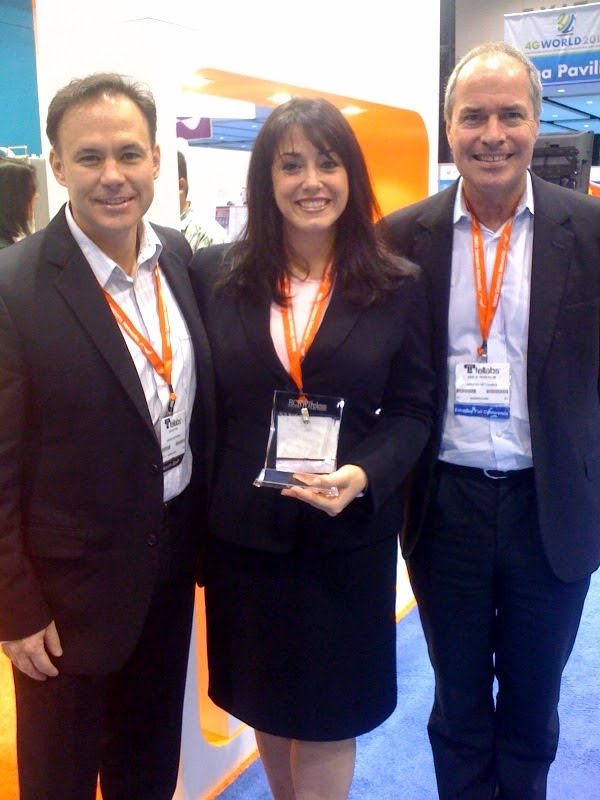
Earlier this week we attended 4G World, an event covering next generation technologies enabling mobile network infrastructure, advanced devices, applications and content. With organizations focusing on the future of mobile broadband, Spectrum Bridge was awarded the 2010 RCR Ecosystem Award for Best Specialty Deployment.
As the recipient of this award, we were recognized for successfully demonstrating the best engineering, design and installation practices; delivery of connectivity objectives; and effectiveness of investment in utilizing TV White Spaces spectrum in a specialty deployment.
The award honored our fourth major trial network deployment at the Hocking Valley Community Hospital in Logan, Ohio, showcasing how TV White Spaces is well suited for the healthcare industry. The applications deployed in this trial network:
As the recipient of this award, we were recognized for successfully demonstrating the best engineering, design and installation practices; delivery of connectivity objectives; and effectiveness of investment in utilizing TV White Spaces spectrum in a specialty deployment.
The award honored our fourth major trial network deployment at the Hocking Valley Community Hospital in Logan, Ohio, showcasing how TV White Spaces is well suited for the healthcare industry. The applications deployed in this trial network:
- Support wireless internet connectivity throughout the hospital
- Provide more efficient wireless transmissions of Emergency Medical Technicians (EMT) staff to Hospital Emergency Administration Staff
- Supply additional security for hospital operations
- Enable patients and visitors to access the internet from their mobile devices
Read more about how Spectrum Bridge’s breakthrough software and services is providing wireless bandwidth for next generation wireless networking.
Sheri Ridenour
Business Development Manager
Monday, October 18, 2010
TV White Spaces Webinar Series
The recent FCC decision to allow use of TV White Spaces spectrum on an unlicensed basis has generated wide interest among IT & Telecom companies as well as end users. Spectrum Bridge will be hosting a webinar series discussing TV White Spaces and what it means for the entire wireless industry, from radio manufacturers to the end user. The first webinar in the series is focused on a general overview about TV White Spaces and will discuss a wide array of topics and questions including:
Presenters Include:
Peter Stanforth, CTO, Spectrum Bridge, Inc.
Coleman Bazelon, Principal, The Brattle Group
Neeraj Srivastava, VP of Marketing and Business Development, Spectrum Bridge, Inc.
WHAT: TV White Spaces Webinar series: Introducing TV White Spaces
WHEN: October 28, 2010 at 2:00pm ET
WHERE: Registration and additional information about the presenters can be found by clicking here.
The second webinar in the series will be focused on the technical aspects about the newly available rules and the certification process that follows. More information about the second webinar in the series will be available shortly. To register for the event, Introducing TV White Spaces, please click here.
- What are TV White Spaces?
- How does it compare to solutions already available?
- What is the economic value TV White Spaces can provide?
- What is the expected timeline moving forward?
Presenters Include:
Peter Stanforth, CTO, Spectrum Bridge, Inc.
Coleman Bazelon, Principal, The Brattle Group
Neeraj Srivastava, VP of Marketing and Business Development, Spectrum Bridge, Inc.
WHAT: TV White Spaces Webinar series: Introducing TV White Spaces
WHEN: October 28, 2010 at 2:00pm ET
WHERE: Registration and additional information about the presenters can be found by clicking here.
The second webinar in the series will be focused on the technical aspects about the newly available rules and the certification process that follows. More information about the second webinar in the series will be available shortly. To register for the event, Introducing TV White Spaces, please click here.
Thursday, September 23, 2010
Unanimous Decision by FCC to use TV White Spaces
Today, the Federal Communications Commission (FCC) held its open commission meeting in Washington DC, with the decision to authorize the usage of TV White Spaces, at the top of their agenda. After two years of discussions, the FCC unanimously voted to approve the use of this unlicensed spectrum, the unused TV broadcast channels made available by the transition from Analog to Digital TV last year.
Specific items were addressed during this meeting and decisions made included:
- There was no spectrum sensing requirement mandated on the TV White Spaces Devices, though the Commission encouraged use and development of the technology as confirmed by Julius Knapp’s statement, "[This begins a] New Era of Innovation and Investment for Unlicensed Devices".
- In every market,wireless microphones would be reserved as a protected entity. Commissioner Baker supported this decision stating "First rule of dynamic spectrum allocation; do no harm [to incumbent spectrum holders]".
- Large wireless microphone users can register with the Commission for protected entity status in a White Spaces database for a specific time, place and duration as long as channels above 7 are in use.
Spectrum Bridge and our Partner’s accomplishments, regarding our White Spaces trial networks in Claudville, VA, Wilmington, NC, Plumas Sierra, CA and Logan, OH, were noted by the Commissioners as driving this order to this decision point today. It was also stated that the TV White Spaces technology can and will be used in other unlicensed as well as licensed bands and will be a road map for future technology as well as U.S. spectrum allocation policy.
Chairman Genachowski summed up the discussions stating “TV White Spaces is about making the US more globally competitive." Spectrum Bridge’s next deployment utilizing its Spectrum Sharing technology will explore the global potential of TV White Spaces spectrum, enabling new technology and providing an alternative solution to meet the increasing worldwide need for broadband spectrum. To learn more about Spectrum Bridge’s past trial networks, or to stay up to date on future deployments, visit http://www.spectrumbridge.com.
Chris Duffus, Vice President of Corporate Development
Tuesday, September 14, 2010
New Applications for TV White Spaces in the Latest Deployment
Spectrum Bridge has announced its fourth major TV White Spaces network trial utilizing the vacant spectrum between existing TV channels known as TV White Spaces. This particular deployment, done in conjunction with Google and the Hocking Valley Community Hospital, is important for not only Spectrum Bridge, but the entire wireless industry as it demonstrates how TV White Spaces can provide cost effective broadband access for healthcare applications.
The trial network at the Hocking Valley Community Hospital showcases that there are alternative ways of enhancing health care provider’s connectivity for critical wireless data transfers. To improve broadband connectivity throughout the Logan, Ohio community, a wireless data link was established on a local ISP tower approximately two miles away from the Logan-Hocking County Health Department, providing non-line-of-sight broadband coverage to the health department and other public areas.
There is now Wi-Fi throughout the Hocking Valley Community Hospital as well as outdoor video surveillance providing additional security for hospital operations. A portable TV White Spaces network was also deployed for the Hocking County Emergency Medical Services that allows first responder’s to wirelessly transfer data directly from their emergency vehicles to EMS data systems inside.
The first three trial networks by Spectrum Bridge and our partners demonstrated that the unlicensed spectrum can go further and penetrate walls better than that of some licensed spectrum. The networks have also demonstrated long range broadband using middle and last mile connectivity to residents of the communities. They have also shown that Smart City’s and Smart Grid’s can be implemented using unlicensed frequencies as a cost-effective solution to rural cooperatives and wireless internet service providers. For more information on Spectrum Bridge’s deployments, click here.
- Neeraj Srivastava, VP of Marketing and Business Development
The trial network at the Hocking Valley Community Hospital showcases that there are alternative ways of enhancing health care provider’s connectivity for critical wireless data transfers. To improve broadband connectivity throughout the Logan, Ohio community, a wireless data link was established on a local ISP tower approximately two miles away from the Logan-Hocking County Health Department, providing non-line-of-sight broadband coverage to the health department and other public areas.
There is now Wi-Fi throughout the Hocking Valley Community Hospital as well as outdoor video surveillance providing additional security for hospital operations. A portable TV White Spaces network was also deployed for the Hocking County Emergency Medical Services that allows first responder’s to wirelessly transfer data directly from their emergency vehicles to EMS data systems inside.
The first three trial networks by Spectrum Bridge and our partners demonstrated that the unlicensed spectrum can go further and penetrate walls better than that of some licensed spectrum. The networks have also demonstrated long range broadband using middle and last mile connectivity to residents of the communities. They have also shown that Smart City’s and Smart Grid’s can be implemented using unlicensed frequencies as a cost-effective solution to rural cooperatives and wireless internet service providers. For more information on Spectrum Bridge’s deployments, click here.
- Neeraj Srivastava, VP of Marketing and Business Development
Friday, September 10, 2010
Can Database-Driven Cognitive Radios Solve the Spectrum Crisis?
There is a perceived spectrum scarcity issue facing the wireless industry today. Most allocated spectrum is entirely spoken for, which reinforces the myth that we are running out of spectrum for wireless communications. A simple spectral analysis of commercial spectrum bands indicates that there is up to 90% of unused spectrum at any given time or place. Craig Mathias, author of the white paper Rethinking Spectrum Scarcity – Database-Driven Cognitive Radio, says that “We actually have access to vast quantities of spectrum in any given geographic location, and, given natural signal strength fading due to the inverse power law, we can further multiply efficiency via the reuse of spectrum over distance.”
One solution that Craig proposes towards solving the spectrum crisis is that of a database-driven cognitive radio approach. Cognitive radios are radios that are, “capable of transmitting and receiving across channels covering a potentially very wide range of frequencies.” By utilizing a database-driven networking approach, these radios will be the first step towards efficiently utilizing the unused or idle spectrum at any given point in time.
One example of an area where database-driven cognitive radios can be effective is in the TV White Spaces spectrum. The FCC is proposing that devices operating in these unlicensed frequencies will need to be certified against a TV White Spaces database to ensure that there are no interference issues. Deploying a database-driven cognitive radio in a band like this, which spans from 54MHz to 698MHz, provides a dynamic network approach to allocating spectrum.
TV White Spaces are a prime example of how cognitive radios can communicate with a database, thus enabling the radio to determine the appropriate frequency to operate on without any human interaction. In the future, we can foresee cognitive radios operating across multiple frequencies in different bands, helping to alleviate the perceived spectrum scarcity. For more information on Database-Driven Cognitive Radios, click here.
- Joe Hamilla
One solution that Craig proposes towards solving the spectrum crisis is that of a database-driven cognitive radio approach. Cognitive radios are radios that are, “capable of transmitting and receiving across channels covering a potentially very wide range of frequencies.” By utilizing a database-driven networking approach, these radios will be the first step towards efficiently utilizing the unused or idle spectrum at any given point in time.
One example of an area where database-driven cognitive radios can be effective is in the TV White Spaces spectrum. The FCC is proposing that devices operating in these unlicensed frequencies will need to be certified against a TV White Spaces database to ensure that there are no interference issues. Deploying a database-driven cognitive radio in a band like this, which spans from 54MHz to 698MHz, provides a dynamic network approach to allocating spectrum.
TV White Spaces are a prime example of how cognitive radios can communicate with a database, thus enabling the radio to determine the appropriate frequency to operate on without any human interaction. In the future, we can foresee cognitive radios operating across multiple frequencies in different bands, helping to alleviate the perceived spectrum scarcity. For more information on Database-Driven Cognitive Radios, click here.
- Joe Hamilla
Friday, September 3, 2010
Coming Soon - FCC to Deliver Final Rules for TV White Spaces
TV White Spaces, the unlicensed spectrum between television bands, has been a hot topic since the switch from analog to digital TV back in June 2009. According to an article in the Wall Street Journal, author Amy Schatz says “Technology and telecommunications companies could soon get access to unused TV airwaves, allowing them to introduce new wireless gadgets and services, under rules that Federal Communications Commission officials are close to putting into final form.” The FCC is expected to vote on the "TV White Spaces Second Memorandum Opinion and Order" on September 23, 2010.
The announcement is long overdue for industry stakeholders such as broadcasters and wireless providers who have been waiting for the FCC to open up the access to this unlicensed spectrum since 2002. Industry leaders such as Cisco and Motorola will now have the ability to certify devices that can operate in these frequencies, ultimately leading the way for the first commercial launch of the TV White Spaces marketplace.
Allowing the spectrum to be delivered on an unlicensed basis allows companies to further demonstrate alternative solutions to alleviating the “spectrum scarcity” issue facing the wireless industry, while still helping to achieve the goals of the National Broadband Plan. The TV White Spaces frequencies will need to be managed by a database that ensures devices will not interfere among one another. Database driven networks open the door for innovative solutions regarding the acquisition and distribution of spectrum assets. For more information on spectrum sharing through databases, click here.
Spectrum Bridge has already demonstrated three of the nation’s first network trials that are still fully operable on experimental licenses from the FCC. The first network was deployed in Claudvile, Virginia and provided broadband access to residents and businesses in the community. The second deployment in Wilmington, North Carolina, demonstrated that the unlicensed spectrum can be used to further enhance “Smart City” applications such as remote water monitoring, security and Wi-Fi access to the city park, as well as traffic monitoring for public safety. The third trial was launched in Plumas-Sierra County exhibiting the usability of this spectrum for "Smart Grid" applications. To read the success stories highlighting the applications used in each of the three network trials mentioned, click here.
Be sure to check back next week for information on a fourth network launch using the unlicensed TV White Spaces spectrum.
- Andrew Pielack
The announcement is long overdue for industry stakeholders such as broadcasters and wireless providers who have been waiting for the FCC to open up the access to this unlicensed spectrum since 2002. Industry leaders such as Cisco and Motorola will now have the ability to certify devices that can operate in these frequencies, ultimately leading the way for the first commercial launch of the TV White Spaces marketplace.
Allowing the spectrum to be delivered on an unlicensed basis allows companies to further demonstrate alternative solutions to alleviating the “spectrum scarcity” issue facing the wireless industry, while still helping to achieve the goals of the National Broadband Plan. The TV White Spaces frequencies will need to be managed by a database that ensures devices will not interfere among one another. Database driven networks open the door for innovative solutions regarding the acquisition and distribution of spectrum assets. For more information on spectrum sharing through databases, click here.
Spectrum Bridge has already demonstrated three of the nation’s first network trials that are still fully operable on experimental licenses from the FCC. The first network was deployed in Claudvile, Virginia and provided broadband access to residents and businesses in the community. The second deployment in Wilmington, North Carolina, demonstrated that the unlicensed spectrum can be used to further enhance “Smart City” applications such as remote water monitoring, security and Wi-Fi access to the city park, as well as traffic monitoring for public safety. The third trial was launched in Plumas-Sierra County exhibiting the usability of this spectrum for "Smart Grid" applications. To read the success stories highlighting the applications used in each of the three network trials mentioned, click here.
Be sure to check back next week for information on a fourth network launch using the unlicensed TV White Spaces spectrum.
- Andrew Pielack
Monday, August 16, 2010
Andrew Seybold helps validate Intelligent Spectrum Management using TV White Spaces
In a recently released whitepaper, Andrew Seybold, a leading authority on technology and trends shaping the world of wireless mobility, discusses his views on the availability of additional spectrum for wireless broadband communications. The whitepaper provides insights on the total addressable market for Intelligent Spectrum Management, which utilizes databases to manage spectrum sharing technologies for both licensed and unlicensed spectrum.
Using a database approach to assign devices to particular frequencies “makes a lot of sense” says Seybold. Rather than additional technology having to be built into each new radio, “the system relies on database technology that can track spectrum in a given area and assign spectrum for systems that require communications on an as-needed basis.” This is the very same approach that Spectrum Bridge is currently demonstrating in three separate experimental trials in the U.S. utilizing unlicensed TV White Spaces spectrum.
As stated in the Rysavy Research Industry Report, the demand for spectrum will soon exceed network capacity for wireless carriers. Seybold reiterates this view stating “the wide-area networks will not be able to meet the demand of the coming years.” However, he believes that TV White Spaces can be used to help alleviate and off-set some of the network traffic, “This new spectrum provides the ideal platform for longer-range, but still local, wireless broadband services and will be used for bridging gaps between wired, cable, and fiber connections and locations that cannot be economically served by either wide-area or Wi-Fi systems.” In addition to alleviating network traffic, TV White Spaces can help to provide additional services to unserved and underserved communities, supporting the FCC National Broadband Plan to provide rural America with broadband access.
What appears to be most intriguing is that the central database approach to spectrum management goes above and beyond the TV White Spaces by using database architecture that can essentially evolve to support both unlicensed and licensed spectrum. For more information about Spectrum Bridge and multiple spectrum sharing technologies, click here.
-Christian Duffus
Using a database approach to assign devices to particular frequencies “makes a lot of sense” says Seybold. Rather than additional technology having to be built into each new radio, “the system relies on database technology that can track spectrum in a given area and assign spectrum for systems that require communications on an as-needed basis.” This is the very same approach that Spectrum Bridge is currently demonstrating in three separate experimental trials in the U.S. utilizing unlicensed TV White Spaces spectrum.
As stated in the Rysavy Research Industry Report, the demand for spectrum will soon exceed network capacity for wireless carriers. Seybold reiterates this view stating “the wide-area networks will not be able to meet the demand of the coming years.” However, he believes that TV White Spaces can be used to help alleviate and off-set some of the network traffic, “This new spectrum provides the ideal platform for longer-range, but still local, wireless broadband services and will be used for bridging gaps between wired, cable, and fiber connections and locations that cannot be economically served by either wide-area or Wi-Fi systems.” In addition to alleviating network traffic, TV White Spaces can help to provide additional services to unserved and underserved communities, supporting the FCC National Broadband Plan to provide rural America with broadband access.
What appears to be most intriguing is that the central database approach to spectrum management goes above and beyond the TV White Spaces by using database architecture that can essentially evolve to support both unlicensed and licensed spectrum. For more information about Spectrum Bridge and multiple spectrum sharing technologies, click here.
-Christian Duffus
Wednesday, July 28, 2010
Spectrum Bridge Database Solution facilitates Spectrum sharing in 5GHz Band
Spectrum Bridge has partnered with the Wireless Internet Service Providers Association (WISPA) creating the UNII Device Interference Advisor (UDIA). The UDIA is a spectrum database solution that provides network operators in the Unlicensed National Information Infrastructure (UNII) frequencies (5.47-5.725 GHz) an easy way to search and find whether their towers potentially interfere with Terminal Doppler Weather Radar (TDWR) systems.
There are currently 47 TDWR systems located nationwide; operators and installers are being encouraged to voluntarily register and manage their device information in the online database. UDIA was developed to promote cooperation between the federal agencies including the National Telecommunications and Information Association (NTIA), the Federal Communications Commission (FCC), the Federal Aviation Administration (FAA), and the wireless industry and to ensure the safe and interference free operation of the FAA’s TDWR network.
Mitigating interference issues between unlicensed wireless devices operating in a frequency band shared with TDWRs makes available approximately 300 MHz of previously unusable spectrum. Efficiently sharing this spectrum not only helps meet the demands outlined in the FCC National Broadband Plan, it also supports Spectrum Bridge’s Universal Spectrum Access vision. Additionally, equipment manufacturers and the wireless industry may also look ahead to the certification of new U-NII equipment. For more information on the release of the database powered by Spectrum Bridge, click here.
- Peter Stanforth, CTO
There are currently 47 TDWR systems located nationwide; operators and installers are being encouraged to voluntarily register and manage their device information in the online database. UDIA was developed to promote cooperation between the federal agencies including the National Telecommunications and Information Association (NTIA), the Federal Communications Commission (FCC), the Federal Aviation Administration (FAA), and the wireless industry and to ensure the safe and interference free operation of the FAA’s TDWR network.
Mitigating interference issues between unlicensed wireless devices operating in a frequency band shared with TDWRs makes available approximately 300 MHz of previously unusable spectrum. Efficiently sharing this spectrum not only helps meet the demands outlined in the FCC National Broadband Plan, it also supports Spectrum Bridge’s Universal Spectrum Access vision. Additionally, equipment manufacturers and the wireless industry may also look ahead to the certification of new U-NII equipment. For more information on the release of the database powered by Spectrum Bridge, click here.
- Peter Stanforth, CTO
Wednesday, July 21, 2010
Spectrum Bridge and GE partner to provide solutions for mission critical network deployments
Spectrum Bridge recently announced a relationship with GE Energy, a leader in advanced communications systems for the Utility, Oil & Gas, Water/Wastewater and Heavy Industrial markets, to offer a new industrial data networking solution for use in mission critical applications.
GE Energy and Spectrum Bridge have partnered to help certify the MDS SD2 radio which is now able to operate in the 216-222MHz frequency range of spectrum. The new wireless network solution utilizes the licensed 218-219 MHz (Interactive Video & Data Service) band of spectrum, ideal for applications which require long range links, transmission through dense foliage, and building penetration.
Several existing licenses of IVDS including 6 of the Top 10 NFL markets are currently available on SpecEx.com. The IVDS spectrum is considered ideal for industrial wireless networking solutions supporting multiple applications including:
Expanding the use of this previously underutilized and unencumbered spectrum into the industrial enterprise markets demonstrates Spectrum Bridge’s core business of providing greater availability and access to spectrum bandwidth and the efficient allocation within a wireless network. For more information, click here.
- Sheri Ridenour, Senior Account Manager
GE Energy and Spectrum Bridge have partnered to help certify the MDS SD2 radio which is now able to operate in the 216-222MHz frequency range of spectrum. The new wireless network solution utilizes the licensed 218-219 MHz (Interactive Video & Data Service) band of spectrum, ideal for applications which require long range links, transmission through dense foliage, and building penetration.
Several existing licenses of IVDS including 6 of the Top 10 NFL markets are currently available on SpecEx.com. The IVDS spectrum is considered ideal for industrial wireless networking solutions supporting multiple applications including:
- Smart Grid
- Smart Meter
- Distribution Automation SCADA
- Remote PLC & Measurement devices
- Water/wastewater control and Remote Monitoring
Expanding the use of this previously underutilized and unencumbered spectrum into the industrial enterprise markets demonstrates Spectrum Bridge’s core business of providing greater availability and access to spectrum bandwidth and the efficient allocation within a wireless network. For more information, click here.
- Sheri Ridenour, Senior Account Manager
Monday, July 12, 2010
Connecting America through Technology
As the FCC begins to take on the action items from the National Broadband Plan, it is clear to see that we are making some progress towards fulfilling the four key goal areas (View progress on the Proposed 2010 Key Broadband Action Agenda Items):
- Maximizing consumer benefit and fostering competition
- Creating strong and secure public safety communications networks
- Accelerating Universal Broadband Access and adoption
- Promoting broadband infrastructure and innovation
The president’s commitment to make available 500 MHz of Federal and commercial spectrum over the next 10 years is a positive step towards building the necessary infrastructure needed to connect the country. Although this spectrum will certainly help to offload the demand for bandwidth over the next 10 years, will it be enough to keep up with the demand from new devices on the market?
In this age of smartphones, netbooks and other innovative wireless devices, demand for bandwidth is at an all time high. Some estimates indicate that over the next five years we will see an increase in wireless data between 20 and 45 times 2009 levels. In order to meet the growing demand for spectrum, it is necessary to seek out a hybrid solution – combining more efficient spectrum use and technology to cost-efficiently address the issue of spectrum scarcity.
In a fact sheet from the White House, it states: “… new technologies have the potential to free up spectrum from many of its existing uses. In combination with regulatory changes, new and emerging technologies can facilitate the repackaging, reallocation, and even sharing of spectrum. Reallocating spectrum to its most valuable use promises to be a win-win effort – creating value that not only spurs new innovations and creates new jobs, but also benefits existing spectrum users by allowing them to raise funds for transformative new investments.”
Spectrum Bridge is leading the way in terms of bringing new technology to the market to help foster innovation and to provide broadband solutions to previously unserved and underserved areas. As we deploy trial white space networks to demonstrate the capabilities of TV white spaces spectrum, we continue to realize the potential of this newly available spectrum. This month, our COO, Joe Hamilla will be presenting at the IEEE 802.19 Wireless Coexistence Working Group meeting to present our experiences with deploying trial TV White Spaces networks. Check back soon for his insights from this workshop!
Richard Licursi, CEO
Subscribe to:
Posts (Atom)


 Posts
Posts


